- Property & Casualty
- Life & Health
- Knowledge Center
-
About Us
About Us OverviewCorporate Information
TOP
Good news! We will most likely live longer than our parents and grandparents: demographic trends show a steady increase in life expectancy thanks to the improvements in healthcare, preventive measures and better living conditions. The not-so-good news: as the population continues to age, we can expect an increased demand for health and long-term care services which are already strained.
According to the World Health Organization, by 2030, one in six people in the world will be 60 years old or older.1 As a longer lifespan does not necessarily mean a longer health span – the part of a person’s life in which they are in good health – the growing elderly population is highly likely to lead to increased care needs. In their current state, health systems are already under a significant burden from shortages of health workers and tight healthcare budgets. Addressing the needs of aging populations in the near future is a pressing challenge.
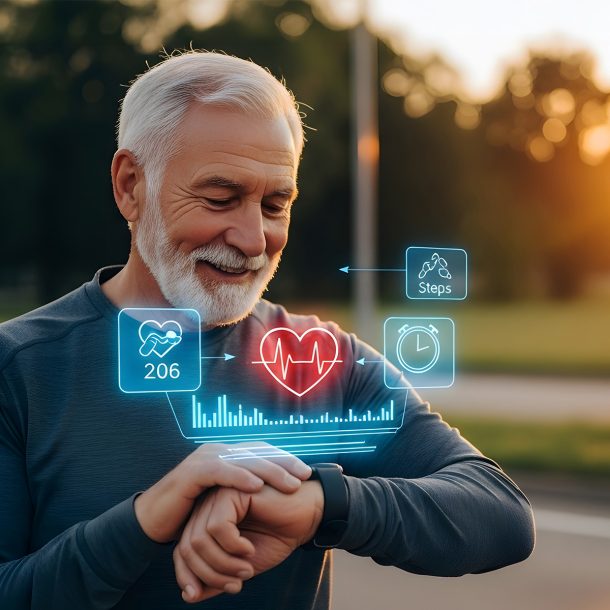
Alternative approaches are going to be necessary to strengthen and scale healthcare delivery and support human wellbeing in the long run. One potential solution lies in the effective utilization of digital technologies for taking care of the elderly population. Digital health applications including telemedicine, digital therapeutics, wearable devices and remote care solutions offer scalable and cost-effective means to alleviate pressure on healthcare systems.
These solutions have been around for a while and can deliver successful results if implemented appropriately. However, when considering their use for older adults, questions arise regarding their effectiveness, barriers for adoption and user perceptions.
Many people use smartphone apps or digital platforms for health concerns ranging from mental health to chronic diseases. The adoption of digital health technologies has accelerated significantly following the COVID‑19 pandemic; these tools have huge potential in easing healthcare delivery, improving human wellbeing, and preventing or delaying serious conditions. However, when it comes to seeking support from the digital health realm for older adults, we might expect different outcomes compared to the general population due to a range of factors such as age-related challenges and personal preferences. It’s important to assess how effective these solutions are for elderly individuals before depending on them.
One area to look at is maintaining bodily mobility and functional capacity through digital health interventions. Regular physical exercise plays a central role in promoting healthy aging: it enhances overall wellbeing, decreases disease prevalence, supports independent living, and lowers the risk of falls among older adults.2 A wide range of digital tools now offer structured exercise programs, providing users with expert guidance and motivation for engaging in physical activity at home.
For example, StandingTall, an Australian digital health program developed through academic research, aims to help older adults improve balance and strength, and maintain confidence and independence through home-based exercises.3 The program focuses on empowering individuals to live actively and age healthily; it delivers personalized exercises through a mobile app, demonstrating reduction in falls and fall-related injuries. The tool is built to be engaging and easy to use, and incorporates validated behavior change strategies to support long-term adherence.
How useful are these types of applications in reality? Asking this question, a systematic review and meta-analysis evaluated the effectiveness of home-based exercise programs delivered through digital health solutions such as mobile apps, websites, and phone calls, on older adults’ physical function.4 More than 5,000 participants were enrolled in the included studies. The analysis showed that digital home-based exercise programs are associated with improvements in muscular strength and functional capacity for elderly people. It was observed that the interventions could reduce the number of falls by 23% and lead to measurable enhancements in health-related quality of life, especially for older adults with diseases. Hence, it can be argued that by leveraging remote support through digital means, elderly individuals can be effectively assisted in maintaining physical strength and activity.
Another health challenge associated with longer life spans is the increased prevalence of chronic conditions such as diabetes. Several mobile health solutions aim to support disease management for diabetes patients through continuous monitoring and adjustments in daily habits. For example, Danish digital health startup Triba Health offers a customized online diabetes management program aimed to control the disease by personalized nutrition and lifestyle interventions instead of solely relying on medication.5 Based on international research, Triba’s approach focuses on slowing the disease progression for people with type 2 diabetes and prediabetes via adjustments in daily habits and diet, supported by ongoing expert guidance. It equips the patient with video courses, online coaching by clinical dietitians, remote doctor consultations, and community support.
Another provider concentrating on disease management is Juli, a digital health startup from the U.S., offering solutions for several chronic conditions such as hypertension, mental health issues, asthma and more.6 Juli’s artificial intelligence-powered mobile app collects data such as sleep and step counts from smart wearables, combines them with integrated medical records, environmental data and user-reported wellbeing information through a daily chat function. By identifying patterns, it derives health insights and recommendations, provides subtle medication reminders and gamified wellness encouragements.
With the growing number and diversity of these tools in various markets, it’s important to assess how they truly affect older adults. This topic is also a focus of scientific research. A meta‑analysis of randomized controlled trials (RCTs) examined mobile health apps for older adults (60 years or older) with type 1 or type 2 diabetes.7 The study involved seven RCTs (n = 490), evaluating the impact of app-based self-care interventions relative to other control conditions (e.g. usual care) on patient outcomes. The results showed that such tools are effective in supporting disease management by helping to reduce blood sugar levels. The app‑based interventions produced a decrease of ‑0.4 on the HbA1c scale, a clinically significant effect, corresponding to valuable improvements in long‑term glycemic control. Medication adherence is also found to be positively affected by mobile health interventions.
Scientific research may have limitations but it is safe to argue that, to some extent, the digital health realm has proven its potential. These tools can enhance health outcomes among elderly populations and support healthy aging. They may serve as useful resources in delivering necessary services when traditional healthcare systems are insufficient.
That said, the success of a digital solution depends on the user’s acceptance, and different generations may have varying perspectives toward these tools. Utilization of digital health is based largely on user trust, comfort with technology and the willingness to integrate such tools in the care journey. We might expect older adults to prefer traditional healthcare paths and methods due to limited digital literacy and established routines. Indeed, a study conducted in Sweden identified technological anxiety as a significant barrier to the adoption of digital health platforms for older adults.8 This population may not have relevant prior experience or the same physical capacity as younger generations, which can create challenges. On the other hand, the same study also revealed that many elderly people believed that using a digital health platform would be more difficult than it proved to be in practice. This suggests that once people give these tools a try, they may find them more approachable than initially expected.
As with any new technology or tool, some level of resistance – and not only from older people – may be expected before the potential advantages are fully recognized. We may expect to be convinced of its benefits before considering a new solution. The same goes for the adoption of digital health tools among older adults. A study examining elderly people’s perceptions of digital health services in Germany found that perceived usefulness was a primary factor influencing the intention to use such tools.9 Also, greater self-efficacy with digital health technologies and lower privacy concerns were found to positively influence the willingness to engage with such services, as one would expect. Social conditions and educational backgrounds also influence the attitudes of older people towards the digital health realm.10
In summary, proving the technology’s usefulness appears to be the key for convincing older adults to integrate digital health in their lives. Proper training and ongoing support on how to utilize them can improve self-confidence and overall perceptions. We can be hopeful that when elderly individuals engage with these tools, they will discover their value and respond with satisfaction.
Apps, platforms, digital interfaces… These may not be the ultimate solutions for the aging-related healthcare crisis, but they are significantly valuable tools to alleviate the impact. When developed and implemented correctly, they can enable scalable and cost-efficient healthcare delivery and convenient use for older adults. We expect to see even more innovative solutions in the future with heightened precision, as technology and human creativity never stop improving. We would be happy to discuss and explore further together.
The companies and products referenced in this article are included to provide illustrative examples. Gen Re is not endorsing any of the companies or their products and the results of using any of these products may vary from user to user and will depend on a variety of independent factors.
All endnotes last accessed on 23 March 2026.