AI in Life & Health Underwriting
New technology is transforming every aspect of the insurance underwriting processing chain – the massive amounts of data handled by insurers are now being processed and summarised for underwriting by artificial intelligence (AI). AI’s principal impact thus far has been expediting the underwriting process by efficiently gathering, analysing, and summarising data. By learning from the existing data of insurers, thus making the systems’ landscapes more complete, AI has been more responsive to underwriter requests than earlier system modifications.
Over the past two years we have been using AI to accelerate underwriting processes and support clients as they develop AI‑enabled underwriting models. In the process, we have increasingly taken on advisory and collaborative roles and have continued careful management of data privacy considerations and associated contractual arrangements.
Through these practical implementations and innovation efforts, we continue to address model bias that may lead to inaccurate analysis, managing the risk of excessive or inappropriate reliance on AI, and raising concerns around fairness and customer trust.
During the extensive discussion of AI‑enabled underwriting, emphasis was on carriers using AI for intelligent document processing, with large language models (LLMs) now handling OCR, indexing, entity extraction, and document summarisation for underwriting, rapidly replacing older “scan and index” systems. This AI‑enabled underwriting 1.0 has been widely accepted by the industry.
In an earlier article1 we discussed how we would like AI to help accelerate our underwriting process. The current article will provide a deeper and more concrete overview of the current state of AI in underwriting, and by extension, its role in enabling straight-through processing. We define AI‑enabled underwriting 2.0 as the next stage of underwriting evolution, where predictive and generative AI are embedded into the workflow to scale decision-making while explicitly balancing efficiency, accuracy, and trust. This piece also outlines the importance of managing bias, fairness, transparency, explainability, and interpretability issues that must be addressed alongside the pursuit of efficiency gains.
Overview of AI‑Enabled Underwriting 2.0
We previously discussed how the bulk of productivity gains from AI can be achieved through the redesign of underwriting workflows, with the objective of striking a better balance between efficiency and accuracy.
Several companies have introduced Attending Physician Statement (APS) summarisation and risk scoring tools2 that combine optical character recognition (OCR) and natural language processing (NLP). These platforms can also integrate data from third-party sources, broadening the information available to underwriters during case assessment. Some platforms go further, producing structured suggestions or recommendations from the summarised inputs, which can assist underwriters in handling complex cases.
Compared with earlier system-led transformation efforts, AI‑enabled approaches have demonstrated greater effectiveness by enriching the underwriting system landscape through deeper utilisation of insurers’ existing data assets. During the daily product environment application, AI can help summarise application inputs using standardised underwriting summary format, for example, to tell underwriters what routine requirements are needed, what have been received, and if it is missing any routine requirements. Underwriters may use AI to categorise risks against the company’s underwriting principles and risk appetite.
To avoid or correct for hallucinations, data needs to be double-checked, and ongoing monitoring and calibration are needed to ensure the interpretation of underwriting guidelines is consistent with insurers’ internal principles. Most applications implemented thus far have focused on summarisation of clinical and medical documents; there is a desire for more applications to summarise financial-related information.
AI tools are meant to assist or augment underwriting decisions; they are not meant to make those decisions independently. The success of AI solutions in the underwriting space varies. When it is accurate, it can help inform underwriters’ learning. So far, however, it has not been entirely reliable.
Predictive AI – Straight-Through Processing
Many elements of straight-through processing (STP) will be familiar to experienced underwriters. What distinguishes AI‑enabled underwriting 2.0 is not new underwriting logic, but the scale, speed, and systemic impact introduced by predictive AI.
In underwriting 2.0, STP is not a binary automation outcome; instead, it is a graduated decision pipeline that must explicitly balance efficiency gains with underwriting accuracy and trust.
In practice, STP can be represented as:
Underwriting data ingestion → Model training → Thresholds → Human intervention → Ongoing monitoring
While all stages are necessary, the implications for efficiency, accuracy, and trust are most pronounced at the underwriting data, model training, and threshold design stages, where AI behaviour is defined and then replicated at scale.
Underwriting Data Ingestion – Efficiency with Context, Trust Through Transparency
Predictive AI derives efficiency from learning patterns in historical underwriting data. However, this data also embeds past underwriting standards and legacy risk appetites, creating structural bias when underwriting practices evolve.
A practical example across many Asian markets is diabetes underwriting. Over the past decade, underwriting guidelines for diabetes have evolved alongside changes in diagnostic standards and improved prognosis resulting from earlier detection and more effective clinical intervention. As a result, underwriting decisions have become less uniformly restrictive and more tailored, reflecting factors such as age of onset, duration, and current disease control. This evolution represents an explicit shift in underwriting risk appetite informed by medical advances and emerging portfolio experience. Historical data may reflect outdated loadings, exclusions, or declination patterns that no longer align with current underwriting intent.
If not explicitly addressed, models trained on such legacy data may produce recommendations that are technically accurate relative to history but misaligned with today’s underwriting standards — with this misalignment replicated systematically at scale through STP. Trust therefore begins at the data stage. Underwriters must understand which time periods and standards the data reflects, which historical decisions may no longer be representative, and which risks warrant heightened caution.
Close collaboration between underwriters and data scientists is essential to make these assumptions explicit, ensuring historical experience is interpreted in context rather than hard-coded into future decisions. In practice, historical underwriting data is often unstructured and inconsistent, requiring experienced underwriting judgement to identify, standardise, and label risk-relevant factors before it can be reliably used for model development.
Model Training – Aligning Automation with Underwriting Intent
Model training translates underwriting experience into scalable decision support. While this enables efficiency, accuracy and trust depend on ensuring that models do not simply replicate outdated underwriting behaviour.
Bias identified at the data stage must be actively managed during training, particularly for conditions with known shifts in standards. Practical approaches include recency weighting, segmentation by underwriting guideline vintage, or constrained learning for specific impairments. In underwriting 2.0, the objective is not maximum statistical accuracy in isolation, but behavioural alignment with current underwriting philosophy.
Thresholds – Balancing Automation and Accuracy
Thresholds determine how predictive AI outputs are operationalised and represent the point where efficiency gains are balanced most directly against underwriting accuracy. Well-designed thresholds allow low-risk cases to flow through efficiently, while ensuring that cases with higher uncertainty, material impact, or evolving standards are escalated for review. In underwriting 2.0, thresholds no longer guide individual underwriters; they govern how and when machines are allowed to act.
From a trust perspective, thresholds provide transparency and control. Underwriters must understand why cases flow through or are stopped, and thresholds must reflect deliberate risk appetite rather than technical convenience.
Human Intervention and Ongoing Monitoring – Sustaining Trust at Scale
Human-in-the-loop review remains a core safeguard in predictive AI, preserving judgement and accountability for complex or evolving risks. Ongoing monitoring closes the STP loop by identifying drift, emerging bias, and misalignment over time, informing data refresh, retraining, and threshold recalibration.
Generative AI in the Underwriting Workflow
While predictive AI reshapes how underwriting decisions are scaled, generative AI is a defining capability of underwriting 2.0 because it changes how underwriting work is performed. Its value lies not in predicting or pricing risk, but in interpreting, structuring, and summarising unstructured medical and financial information at scale.
In underwriting 2.0, generative AI delivers material efficiency gains by accelerating underwriting workflows while introducing new accuracy and trust considerations that must be actively managed. Its impact is most effective when embedded at specific stages of the underwriting process:
Case intake → Summarisation → Requirement validation → Risk categorisation → Human-in-the-loop decision
Case Intake and Summarisation – Efficiency Gains with Context
In many Asian markets, underwriting documentation is fragmented across providers, languages, and formats. Generative AI delivers efficiency gains by consolidating medical reports, laboratory results, and narrative records into coherent summaries, reducing manual review effort and turnaround times. An additional source of value is rapid translation, which allows underwriters to review cases documented in foreign languages without relying on manual translation or local intermediaries – particularly relevant in cross-border underwriting and regional hub operating models.
At the same time, these efficiency gains introduce new trust considerations. Hallucination risk is present not only in generative AI summarisation, but also in upstream OCR, where extraction errors or misread text can propagate into downstream workflows if left unchecked. In multilingual environments, linguistic and contextual nuances further increase the risk of misinterpretation, even when the underlying information has been accurately extracted.
As a result, human validation remains essential to maintain trust. OCR, translation, and summarisation enhance accessibility and consistency, but they do not substitute for underwriting judgement when assessing medical relevance, contextual significance, or risk implications. In underwriting 2.0, generative AI strengthens efficiency at the front end of the underwriting process, while disciplined human oversight ensures that speed and scale do not come at the expense of accuracy or trust.
Requirement Validation – Assistive, but Influential
Generative AI can support requirement validation by flagging missing evidence, inconsistencies, or gaps in documentation. While these uses remain assistive, inaccuracies at this stage can influence downstream decisions by shaping perceived case completeness.
Risk Categorisation and Human Oversight – Deliberate Trust Boundaries in Underwriting 2.0
While generative AI can support risk categorisation by organising and structuring underwriting information, its use in this stage is intentionally constrained due to hallucination risk, particularly when interpreting complex or narrative medical and financial information. As a result, generative AI is positioned to assist underwriters by improving information accessibility and consistency, rather than determining or finalising risk outcomes.
Underwriting decisions at this stage continue to rely on professional judgement, ensuring that workflow efficiency does not translate into unexamined decision influence.
AI Model Considerations
The implementation of AI models within underwriting workflows requires a well-considered risk assessment. In recent years, regulatory requirements aimed at managing AI‑related risks have continued to evolve globally, many of which are applicable to both traditional predictive AI models and generative AI applications.
One of the most widely cited regulatory frameworks is the EU AI Act, which seeks to strengthen compliance while promoting transparency and accountability in the development and deployment of AI systems. Under this framework, the use of AI in Life and Health underwriting that materially influences underwriting decisions is explicitly classified as a high-risk application,3 warranting heightened scrutiny and a clear understanding of the associated risks. As a result, such systems are subject to more stringent requirements, including robust governance structures, risk management controls, human oversight, and ongoing monitoring throughout the AI lifecycle.
These use cases should be distinguished from applications where AI is used primarily to summarise or structure underwriting information to support underwriters in evaluating cases, rather than to make or directly influence underwriting decisions.
Bias, Fairness, Explainability, Transparency, and Interpretability
Balancing bias and fairness are central considerations in the application of AI models within underwriting. However, achieving this balance is inherently complex, as bias and fairness can manifest in multiple forms throughout the AI lifecycle.
Bias in AI systems may originate from the underlying data used to train the models. For example, historical data may reflect past underwriting practices or societal patterns that disadvantage certain groups. Bias may also arise from the direct use of protected characteristics, or indirectly through proxy variables that encode similar information. For instance, certain occupations may be strongly correlated with specific demographic attributes, such as gender, and can therefore introduce unintended bias even when protected variables are excluded. Bias can also be introduced during feature engineering, where derived variables amplify existing disparities in the data.
In addition to data-related sources, algorithm design and model objectives can further contribute to bias. Models optimised primarily for overall accuracy may underperform for rare outcomes or minority populations, leading to systematically less reliable predictions for these groups. Without appropriate safeguards, such design choices can result in biased outcomes that disproportionately affect certain segments of the insured population.
Achieving fairness in AI models must happen alongside managing bias in AI systems. Fairness has to be defined, documented, monitored, and governed. Different definitions of fairness may lead to different outcomes, and trade-offs between fairness, accuracy, and risk differentiation are often unavoidable. As such, fairness objectives must be explicitly defined, governed, and reviewed by the insurer, with appropriate human oversight to ensure that AI‑supported decisions remain aligned with underwriting principles, regulatory expectations, and customer trust.
For instance, the proposed guidelines of AI risk management by the Monetary Authority of Singapore4 set out the principles that:
A financial Institution should define what it considers “fair” outcomes and have appropriate controls to identify and mitigate harmful biases and discriminatory outcomes across the AI life cycle, calibrated to its assessed risk materiality.
In the context of underwriting, this may involve reviewing the use of protected attributes and relevant proxy variables and assessing outcomes across defined sub-populations using appropriate fairness metrics. Such assessments help insurers identify and mitigate unintended discriminatory effects arising from data, model design, or implementation choices.
Beyond bias and fairness considerations, explainability, transparency, and interpretability are also elements of responsible AI deployment.5 Regulatory requirements generally expect transparency in the form of appropriate disclosures to affected individuals, including the use of AI in decision-making, the potential impact of AI‑supported decisions, and the availability of channels for review or redress where appropriate.
Therefore, depending on how an AI system is used within underwriting, insurers must calibrate the appropriate degree of disclosure and ensure that AI‑assisted outputs can be adequately explained and interpreted by internal stakeholders and, where relevant, affected individuals.
Balancing Accuracy and Efficiency
When we discuss with clients the performance of the AI underwriting applications, we advise that the reasoning and coding should be under the guidance of experienced underwriters. If the quality and volume of training data are limited, we suggest that model supervision, hard-rules implementation, and ongoing calibration be implemented to ensure that deployment complies with relevant regulation, that models are adopted in alignment with each organisation’s vendor risk appetite, and that any systemic risks are identified and mitigated. These processes contribute to satisfactory model performance.6
The system of checks and balances that any insurer would already have in place should apply uniformly, regardless of how recommendations or decisions were made.
In general, AI systems are deployed in underwriting to improve efficiency. However, efficiency gains should not come at the expense of underwriting accuracy. Accordingly, at Gen Re, we engage clients in discussions around the true performance of AI underwriting applications, beginning with an emphasis on sound reasoning and model development conducted in close collaboration with experienced underwriters.
From an output perspective, model performance may be affected by factors such as data scarcity and data quality. In preparation for deployment, appropriate model governance frameworks must also be established to ensure compliance with applicable regulatory requirements. The extent of governance and oversight required will depend on the degree of autonomy granted to the underwriting model, particularly whether it is used for decision support or for decision‑making.
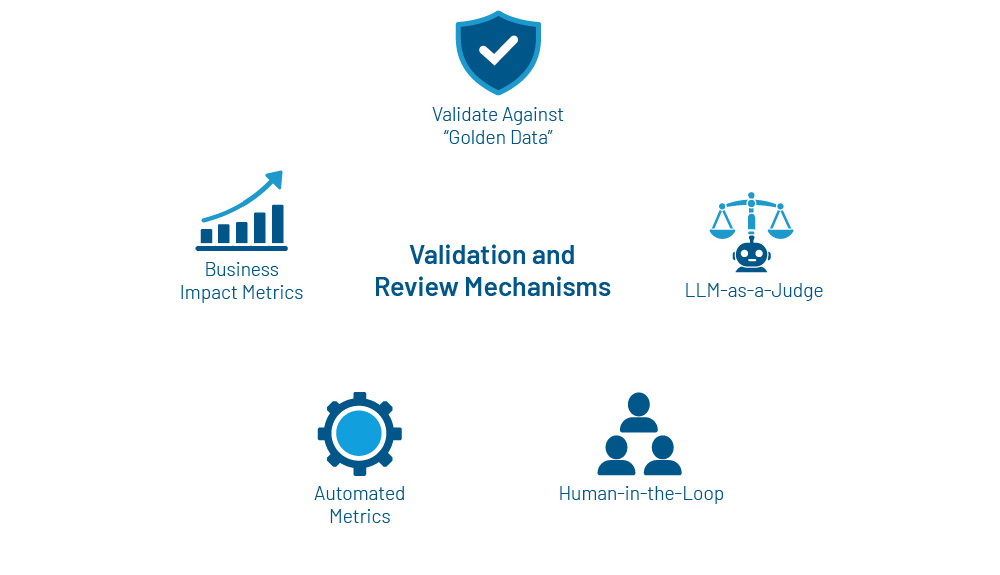
A commonly adopted approach to safeguarding accuracy is the implementation of validation and review mechanisms. This would typically include setting up the following: