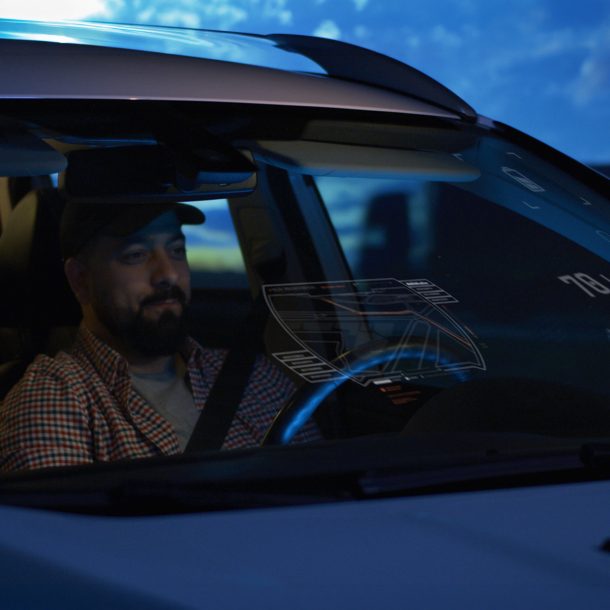
According to the National Highway Traffic Safety Administration (NHTSA), alcohol-impaired driving crashes kill approximately 12,000 people and injure thousands more each year.1 These crashes account for roughly 30% of all traffic fatalities in the U.S. In response to this continuing, yet preventable, public safety crisis, the U.S. Congress passed the HALT (Honoring the Abbas Family Legacy to Terminate) Drunk Driving Act in 2021 as part of the Infrastructure Investment and Jobs Act. The legislation directs the NHTSA to establish a federal motor vehicle safety standard requiring advanced impaired-driving prevention technology in new passenger vehicles.2
The HALT Act represents a significant traffic safety initiative, building on decades of vehicle safety advances such as seat belts, airbags, and electronic stability control. While supporters believe it could save thousands of lives annually, critics have raised concerns about privacy, government overreach, technology reliability, and implementation costs. This blog examines why the law was created, how the technology is expected to work, the arguments for and against it, and why insurance carriers may ultimately benefit from its adoption.
The Origins of the HALT Drunk Driving Act
Despite decades of education campaigns, stricter enforcement, and criminal penalties, drunk driving continues to cause significant loss of life. Alcohol-impaired driving fatalities increased after 2019, adding momentum to calls for stronger preventive solutions. The legislation is named in memory of the Abbas family, who were killed by a wrong-way drunk driver in Kentucky. The tragedy became a catalyst for lawmakers and safety advocates seeking technology-based solutions that could prevent an impaired driver from operating a vehicle.3
For many years, policymakers relied on deterrence strategies, including DUI arrests, license suspensions, fines, and ignition interlock devices. While those measures have proven effective in some circumstances, recent laws reflect a shift toward a proactive approach using technology built into vehicles to prevent impaired-driving incidents before they occur.4
The HALT Act shifts the focus from punishment after impaired driving occurs to prevention before or during vehicle operation. Like other vehicle safety technologies, the systems envisioned would operate automatically rather than depending entirely on drivers to take preventive action.
The Objectives
The law directs NHTSA to establish a Federal Motor Vehicle Safety Standard requiring new passenger vehicles to be equipped with “advanced drunk and impaired driving prevention technology.”5 The legislation is technology-neutral, meaning it does not mandate a specific solution. Instead, regulators are authorized to evaluate multiple technologies and establish performance standards.
The objective is straightforward: prevent or limit vehicle operation when a driver is impaired by alcohol or other substances. Under the law, automakers may use systems that directly measure alcohol levels, monitor driver behavior, or combine multiple technologies to identify possible impairment or detect a blood alcohol concentration above the applicable legal limit.
Supporters point to research indicating that widespread deployment of impaired-driving prevention technology could save thousands of lives annually once fully implemented across the vehicle fleet. The Insurance Institute for Highway Safety (IIHS) has cited this potential as evidence of the significant impact such technology could have on roadway safety.6
Importantly, the law does not establish a government-controlled system for remotely disabling vehicles. Rather, it calls for vehicle-based technology that can passively identify possible impairment and prevent or limit vehicle operation under defined conditions.7
How Will it Work?
One of the most misunderstood aspects of the HALT Act is the technology itself. Contrary to many social media claims, the legislation does not require drivers to blow into a breathalyzer before starting their vehicles. Instead, Congress envisioned “passive” systems that operate with minimal or no driver interaction.8
Several technologies are currently under development or evaluation.
Breath-Based Detection
One approach uses sensors integrated into the vehicle cabin, such as the steering wheel area or steering column. These sensors can sample the driver’s breath and estimate blood alcohol concentration (BAC) without requiring the driver to blow into a device. If the system detects a driver BAC at or above the applicable legal limit, it could prevent or limit vehicle operation.
Touch-Based Detection
Another technology uses sensors embedded in commonly touched surfaces, such as a start button or steering wheel. By analyzing alcohol levels through skin contact, the system could estimate whether the driver is impaired before the vehicle is operated. The Driver Alcohol Detection System for Safety (DADSS) program has invested in developing this technology.
Camera and Driver Monitoring Systems
Advanced camera-based systems can monitor eye and head movement, facial characteristics, reaction times, attention levels, and other indicators associated with impairment. Similar driving-monitoring systems already exist in some vehicles to detect conditions such as drowsiness and distraction. Future versions may be able to identify impairment and take corrective action.
Multi-Layered Approaches
NHTSA is evaluating a range of technologies and approaches that could be used to detect or prevent impaired driving. Systems could potentially combine alcohol-detection technology with driver-monitoring technology to improve performance and reliability.
The Opposition
Although the public safety goals of the legislation are widely supported, opposition exists for several reasons:
- Privacy Concerns – Critics worry that in‑vehicle cameras and monitoring systems could collect or process sensitive personal information. They argue that privacy protections, data-use limitations, and cybersecurity safeguards should be clearly defined before widespread deployment.
- Government Overreach – Some opponents characterize the requirement as a government-mandated “kill switch.” The law does not establish a remotely operated, government-controlled shutdown system, but critics remain concerned about vehicle technology capable of preventing or limiting operation.9
- Reliability and False Positives – A major concern involves technological accuracy. If a system incorrectly identifies a sober driver as impaired, it could prevent legitimate vehicle operation. NHTSA has acknowledged that accurately detecting impairment around the legal BAC limit remains a significant technical challenge and continues to study potential solutions.10
- Cost and Implementation Challenges – Automakers may face engineering, testing, and compliance costs associated with integrating the technology into new vehicles.