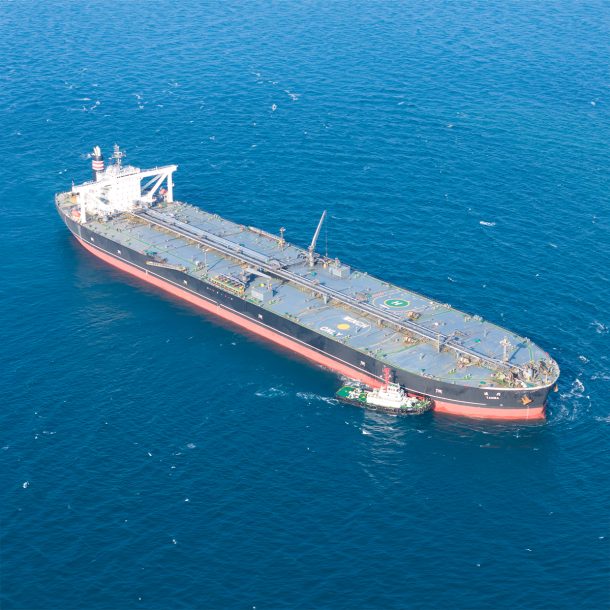
Not every geopolitical shock has the same macroeconomic or insurance impact. Some events remain largely regional or political in nature. Others, however, affect the global economy almost immediately because they hit energy flows, supply chains, trade routes, and inflation expectations. The current Middle East conflict clearly belongs to the second category.
The year started with the U.S. military operation that removed Nicolas Maduro from power on 3 January 2026, and possible changes in Venezuela’s future, economy, political landscape, and trade partners. After Maduro’s removal, Venezuela’s oil flows pivoted away from China and toward the United States, the latter becoming the preferred and policy-supported buyer for the heavy crude oil suited to its Gulf Coast refineries.1
Although the negative impacts on the global economy were very limited and non-inflationary, attention soon turned back to the Middle East, including the outbreak of the Iran war at the end of February and Iran’s closing/militarizing the Strait of Hormuz, which directly impacts approximately a fifth of the world’s seaborne oil and LNG trade.
Immediately the price of oil surged by more than 55% in March alone, with brent costing up to USD 120 per barrel at its peak.2 This was one of the largest monthly oil price jumps on record, comparable only to the 1973 oil embargo, 1991 Gulf War, and Russia’s invasion of Ukraine in February 2022.
The key economic message is that a disruption in the Strait of Hormuz can transmit quickly into oil prices, inflation expectations and global growth uncertainty. How much of the initial price shock translates into sustained inflation depends, in turn, on how central banks respond and whether longer-term inflation expectations remain anchored. For insurers and reinsurers, this type of shock matters not only because of the immediate market reaction, but also because of the potential second-round effects on claims inflation, repair costs and replacement values. Even a relatively short-lived energy spike can feed directly into the cost of open claims, where settlement values are set in the prices of the day, not those of the underwriting year.
Given the amount of oil that flows through the strait to feed global demand, its complete reopening has a direct and strong impact on the price of crude. On 17 April, for example, its temporary reopening produced a sharp single-day drop in brent price, as expected.3 Clearly, the longer the strait remains closed, the harder it will be to adjust supply chain bottlenecks, infrastructure damage, and lingering production outages, keeping the market tight and anchoring the price of crude to a higher price range for longer when compared to pre-crisis level. This environment fuels an inflationary scenario that has already started to unfold.
IMF Reference Forecast and Downside Scenarios
According to the International Monetary Fund’s (IMF), under the assumption that the conflict remains limited in duration and scope, its April 2026 reference forecasts global growth to slow to 3.1% in 2026 and 3.2% in 2027.4 Meanwhile, global inflation is projected to rise modestly in 2026 to 4.4% before resuming its decline in 2027 to 3.7%. The IMF presents two downside scenarios – adverse and severe – modeling “the potential range of magnitudes” if the conflict fails to be contained in scope and duration.
- The IMF adverse scenario corresponds “to an average petroleum spot price index of about USD 100 per barrel in 2026 and about USD 75 in 2027,”5 resulting in the following:
- “global growth would be reduced by 0.8 percentage point from the pre-conflict forecast level in 2026, dropping to 2.5 percent. There would also be a modest 0.2 percentage point [reduction] on growth in 2027, bringing global growth to 3.0 percent.”6
- “Inflation would be 1.5 percentage points higher [than the pre-conflict forecast] at 5.4 percent in 2026, and 0.4 percentage point higher at 3.9 percent in 2027. Most of the impact on inflation and over half the impact on growth in 2026 come from higher energy prices.”7
- The severe scenario corresponds “to an average petroleum spot price index of about USD 110 per barrel in 2026 and about USD 125 in 2027.”8
- “global growth would be reduced by 1.3 percentage points in 2026,” and “reduced by 1.0 percentage point in 2027, to 2.2 percent.” The 2026 reduction projected under this scenario teeters on the brink of being a global recession, defined by a growth rate below 2%, which, the IMF reminds us, “has happened only four times since 1980, with the latest two occasions corresponding to the [2008] global financial crisis and the [2020] COVID‑19 pandemic.”9
- Inflation would reach 5.8% in 2026, and 6.1% in 2027. Oil and gas price increases are larger and more persistent under this scenario. “Most of the impact on inflation and over half the impact on growth in 2026 come from higher energy prices.”10
“In both scenarios, the impact on emerging markets would be greater than that on advanced markets.”11 This is particularly relevant for the insurance and reinsurance industry, because inflationary pressure, currency volatility and lower growth can affect claims severity, replacement costs and purchasing power differently across markets. Emerging markets tend to feel the impact more sharply because energy and food account for a larger share of consumer baskets, currency depreciation amplifies imported inflation, and central banks generally have less room to absorb the shock without de‑anchoring expectations.
For the insurance and reinsurance industry, inflation is not an abstract macroeconomic variable. It directly affects claims severity, repair costs, replacement values, medical costs, legal awards, loss adjustment expenses and, ultimately, the adequacy of reserves and pricing assumptions. Importantly, claims inflation does not move in lockstep with headline CPI: motor lines track repair and parts costs, property tracks construction and materials, and casualty is shaped as much by social inflation and legal-award trends as by the broader economy. Each line of business has its own cost drivers, and an energy-led inflation shock will not feed through to every portfolio in the same way or at the same pace. A policy written today at a seemingly adequate rate may prove underpriced several years later if the underlying loss trend accelerates beyond expectations.
Pricing Softening, Abundant Capital and Underwriting Profitability
This is where the macroeconomic backdrop and the market cycle meet. A softening rate environment is a manageable cyclical issue in a stable inflation regime; it becomes a much larger problem if any version of the IMF’s downside scenarios takes hold, because the business being written today would then be priced against a loss trend it never anticipated. When we reflect on pricing softening for the industry that took place in the January renewals and is poised to persist throughout the year – considering that a benign cat environment will carry on – it is worrisome to consider the impact should the adverse, or even more dramatically the severe, inflationary scenario described above materialize. Higher-than-planned inflation will have a direct impact on the portfolio underwriting profitability margin, resulting in a far greater discount than initially planned.
Given the amount of capital available in the reinsurance industry and respective players’ growth goals, it is hard to foresee a fundamental shift on strategies, especially given positive past results and current expectation of rate adequacy. Global reinsurance capital today is approximately USD 780–800 billion, split roughly 80% traditional and 20% alternative, representing the deepest and most diversified capacity base the market has ever had.
The danger is that recent strong results create an illusion of rate adequacy. High capital levels, benign catastrophe experience, and strong investment income can temporarily mask a deterioration in technical pricing. But if rates decline faster than loss trends, the market may only discover the true cost of the business several underwriting years later.
However, abundant capacity does not necessarily mean homogeneous capacity. A significant share of global reinsurance capacity remains concentrated among the largest global reinsurers, many of which continue to show a high degree of underwriting discipline. The pressure on pricing often comes from smaller or more opportunistic capacity providers seeking to gain market share through lower prices. This creates an important distinction between price and value: price is what clients pay, but value is what they receive when losses occur. After several years without truly major catastrophe losses, the real test of some of this cheaper capacity may only come when the market faces a large accumulation of claims. At that point, the question will not only be who offered the lowest price, but who has the financial strength, claims-paying ability, and long-term commitment to stand behind the promise.
The main concern is not merely the softening market, but the pace and depth of the decline. It appears that competition is shifting from technical discipline to volume, a pattern that has historically proven unhealthy. The cost of our product is only known after a few years, and an unfavorable macroeconomic scenario, such as low growth and higher-than-expected inflation, will have a negative impact, potentially placing rates well below the underlying loss trend.
Through a very simplistic approach we can notice the depth of the impact that rate decreases, and unaccounted inflation would have on the overall profitability of the portfolio. As you can see a mere 10% rate decrease would deeply impact underwriting profitability, and when that is accompanied by inflation, the scenario worsens, increasing losses and expenses and eroding underwriting profit further.
Illustrative Underwriting Impact