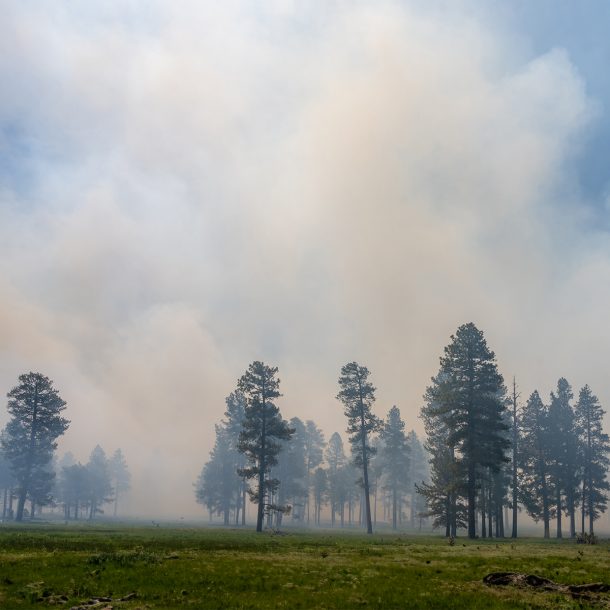
When the Netherlands requested assistance through European emergency-response channels in early May 2026 to combat wildland and vegetation fires, this was more than a logistical detail. Several fires were burning simultaneously within a short period, stretching national firefighting resources and prompting support from France and Germany.1 Units from North Rhine-Westphalia were deployed near Eindhoven and in operational areas such as Weert, where they supported firefighting efforts under difficult conditions, including dry, sandy soil, and gusty winds.
For insurers and reinsurers, the relevant question is not whether the Netherlands will become another California. It is whether a more frequent wildfire hazard can intersect with dense, highly concentrated values in a market where pricing, exposure capture, accumulation controls, and client mitigation dialogue may not yet fully reflect the peril. That is precisely why the Dutch case matters. It suggests that wildfire in the Netherlands should no longer be seen merely as an occasional vegetation-fire issue, but increasingly as a developing risk with broader relevance for public authorities, businesses, insurers, and reinsurers.
This article addresses three questions: how wildfire risk is changing in Europe, why the Netherlands deserves closer attention, and what this means from both a prevention and an underwriting perspective.
Wildfire Risk in Context
The European Union defines a wildfire or forest fire as a fire that breaks out and spreads on forest or other wooded land, or that starts elsewhere and spreads into forest and wooded areas.2 Prescribed or controlled burning is explicitly excluded. In practical terms, wildfire can therefore be understood as an uncontrolled vegetation fire with the potential to spread across combustible landscapes.
From a risk perspective, the key point is that wildfire is a dynamic rather than static peril. It is shaped by the interaction of weather, ignition, and fuel, which means both frequency and severity can shift rapidly. Causes may be natural or human, making prevention, public awareness, and root-cause analysis especially relevant from both public-risk and (re)insurance perspectives.
Viewed globally, fire is not abnormal. In many ecosystems, it is a natural and recurring process that has shaped vegetation patterns for millennia. Australia, for example, is one of the world’s most fire-prone continents, and its eucalyptus-dominated landscapes are ecologically adapted to regular burning. Likewise, large parts of Africa experience frequent landscape fires, especially in savannas and grasslands, where seasonal wet-dry cycles and land-management practices drive high annual burned areas.
What has changed, however, is the extent to which wildfire now translates into material economic and insured loss. Once fire begins to intersect with people, settlements, infrastructure, and commercial assets, it ceases to be merely an ecological process and becomes a genuine insurance and reinsurance concern. In that sense, wildfire is no longer only an environmental issue; it is increasingly becoming a societal, economic, and insurance-relevant peril in Europe.
Since the beginning of the 21st century, wildfire activity has intensified significantly. Fires have become more frequent, more severe, and more geographically widespread.3 Climate change is considered a material contributing factor. Rising temperatures, more frequent heatwaves, prolonged droughts, and shifting vegetation patterns are increasing both the likelihood and severity of wildfire events. Fire seasons are becoming longer, fuels are drier, and weather conditions are more conducive to extreme fire behavior.
The consequences are substantial, ranging from biodiversity loss and ecological degradation to infrastructure damage, business interruption, evacuation costs, and major expenditures for response and recovery. Wildfires are also increasingly occurring in regions once considered unlikely wildfire zones, including tropical rainforests, peatlands, the Arctic, and parts of northwestern Europe. The Netherlands, historically not regarded as a major wildfire country, is increasingly being recognized as an emerging area of concern.
In this context, some researchers speak of the “Pyrocene” – a proposed epoch in which human fire use and fire-driven climate change have become major forces shaping Earth systems. Closely linked to this is the concept of the “megafire”: an exceptionally large, intense, and long-lasting vegetation fire that is extremely difficult to control. While rare, such events account for a disproportionate share of global burned area and can overwhelm suppression capacity, with severe consequences for communities, ecosystems, infrastructure, and insurers.
The scale of potential loss is no longer theoretical. Insured losses from the 2025 Los Angeles wildfires were estimated at around USD 30 billion, while total economic losses could exceed USD 250 billion.4
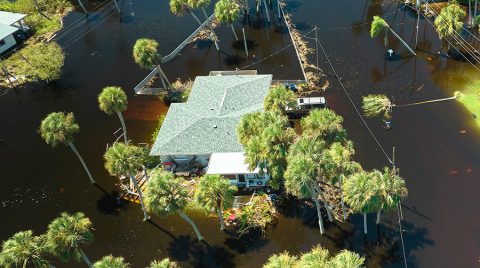
By comparison, although not considered exceptional from a (re)insurance perspective, Hurricane Milton (2024), a Category 5 storm, tied with Hurricane Rita (2005) as one of the most intense Atlantic hurricanes ever recorded in the Gulf of Mexico.5 Yet, although Hurricane Rita weakened from a Category 5 to a Category 3 storm by the time it made landfall, both Rita and Milton generated insured losses of a broadly similar order of magnitude.6 This comparison matters because it challenges the traditional tendency to view wildfire purely as a secondary peril with limited (re)insurance relevance, especially outside the United States.
Europe’s Wildfire Geography is Changing
Wildfire risk in Europe is no longer limited to the Mediterranean. The 2025 season underlines the clear trend that record temperatures are increasing, with record carbon emissions and the largest burned area on record, particularly in Spain and Portugal during a severe August heatwave.7 More importantly, wildfire activity expanded geographically, reaching higher latitudes – including unprecedented levels in Germany and incidents in Scotland – highlighting that northern and northwestern Europe are increasingly exposed.
From an underwriting perspective, this geographic expansion is the most important development. The issue is not simply that Europe experienced a severe fire season, but that the footprint of the hazard is broadening. If wildfire is becoming more relevant across a wider set of territories, then underlying risk assumptions, exposure management, accumulation controls, and portfolio relevance in non-peak markets may also need to be revisited.
The severity of the 2025 wildfire season triggered repeated activation of the EU Civil Protection Mechanism, with extensive cross-border support including aircraft, helicopters, and personnel. This underscores a structural shift: wildfire is becoming a significant and expanding natural hazard across Europe, with increasing relevance even for countries such as the Netherlands that were previously considered low risk.
The Netherlands – No Longer a Marginal Wildfire Story
The largest wildfire in the Netherlands to date occurred in 2020 in the Limburg region, in De Meinweg National Park near the German border.8 Due to severe drought and strong winds, contributing factors to the fire’s severity, around 500 firefighters were involved in the response. The fire destroyed a large area of land and threatened campsites, property, and residential areas on both the Dutch and German sides of the border. It has since been regarded as a wake‑up call for emerging wildfire risk in the Netherlands.
This development is not surprising from a climatic perspective. KNMI has described how Dutch spring conditions have become sunnier and drier, increasing wildfire likelihood. The Netherlands is experiencing a second consecutive dry spring, with limited rainfall and rising temperatures driving water stress and an early precipitation deficit. Scientists warn that soil and groundwater have not fully recovered from last year's drought, while climate change is making such conditions more frequent.9 The impacts include increased irrigation demand, pressure on agriculture and ecosystems, and heightened wildfire risk. These are precisely the conditions that increase wildfire vulnerability in the Netherlands, and these conditions are expected to occur more often in the future.
EFFIS data support the same conclusion: while absolute burned areas in the Netherlands remain low by European standards, recent years show a clear upward shift.10 From an underwriting perspective, the key signal is not the current level, but the fact that the hazard is becoming more visible and may increasingly test response capacity.
Operationally, the 2026 response underlined the seriousness of the situation. The Netherlands requested assistance through EU mechanisms, and German units from North Rhine-Westphalia supported operations on site with all-terrain firefighting vehicles, command support, and logistics. From a reinsurance perspective, this matters not because the Dutch experience already mirrors Spain, Portugal, or California in scale, but because it highlights a shifting risk landscape in a market where wildfire has not traditionally been front of mind.
In summary, the underwriting relevance lies not in absolute burned area alone, but in the possibility that even relatively modest wildfire events may begin to interact more frequently with economically dense and highly interconnected concentrations of value. Residential areas, transport corridors, logistics hubs, industrial sites, and commercial property can all turn a vegetation fire into a materially different loss scenario. The Netherlands remains a moderate wildfire-loss market by international standards, but recent operational experience suggests that it should no longer be treated as irrelevant for exposure management, client dialogue, or emerging-peril monitoring.
Managing a Changing Wildfire Risk
If the risk landscape changes, both prevention and risk management need to improve accordingly. On the prevention side, the Netherlands is not starting from zero. Dutch firefighting services already operate an online platform that provides an overview of potentially endangered areas and links current danger phases to practical recommendations for personal behavior. KNMI is also working on an early warning approach that combines weather data with incident reporting to support emergency responders.11 Most importantly, wildfire response in the Netherlands increasingly needs to be treated as part of normal operational planning rather than as an exceptional event.
From a risk-management perspective, however, one issue stands above all others: data. To mitigate the consequences of future wildfire events, it is essential to capture data systematically – where fires occur, when they occur, how often they occur, and what impact they have. At present, the available data remains incomplete. Without more systematic information, it is difficult to improve either public preparedness or underwriting quality.
This is especially important for underwriting, as better data is the basis for stronger exposure assessment, more credible analytics, better accumulation management, and more meaningful client dialogue on mitigation and resilience. Underwriting approaches should therefore evolve accordingly: through improved exposure transparency, stronger geospatial analytics, accumulation stress-testing, and a clearer view of how wildfire may interact with industrial, logistical, and residential concentrations of value in markets not traditionally viewed as significantly exposed.
Although wildfire remains a relatively new concern in some parts of Europe, there is considerable international experience available from which to learn, especially in relation to preparedness, prevention, and response planning.
Conclusion
Even though wildfire events in the Netherlands have so far remained relatively modest, the underlying risk environment is shifting. Europe’s 2025 wildfire experience demonstrates that the geographic footprint of wildfire-prone conditions is broadening, including into regions not historically viewed as peak wildfire territories.
For the (re)insurance industry, the implications are clear: wildfire is increasingly an underwriting topic, not merely an environmental issue or secondary peril. As frequency rises and more severe scenarios become possible, losses may extend beyond forest and land damage to property and infrastructure in conflagration-type events – particularly in areas where vegetation, property, and infrastructure are closely connected.
Underwriting approaches should continue to evolve through stronger data, analytics, accumulation stress-testing, and risk differentiation. Prevention remains equally important, supported by public awareness and better tracking of ignition sources. Broader ownership across underwriting, claims, analytics, risk management, accumulation control, and client dialogue is essential, as emerging perils are most dangerous when they are recognized too late or assessed in silos.
The key message is straightforward: the Netherlands is not exempt. Loss experience may still be moderate by international standards, but this is precisely the stage at which disciplined underwriting, better data, stronger analytics, prevention, and early engagement can make the greatest difference.
As outlined in this blog, wildfire represents an emerging risk that Gen Re is actively monitoring. Maintaining constructive dialogue and strong partnerships with our clients remains a cornerstone of our underwriting approach. We therefore welcome continued engagement with our clients and partners as we work together to better understand, manage, and mitigate this evolving risk. Please do not hesitate to contact the authors or your local Gen Re representative for further discussion.