Few insurers in temperate markets have ever had to assess chikungunya. For decades, dengue fever and chikungunya were both considered geographically limited infections – relevant to travel medicine, but largely irrelevant to Disability portfolios outside the tropics.
This assessment was epidemiologically justified. Today, it warrants reassessment.
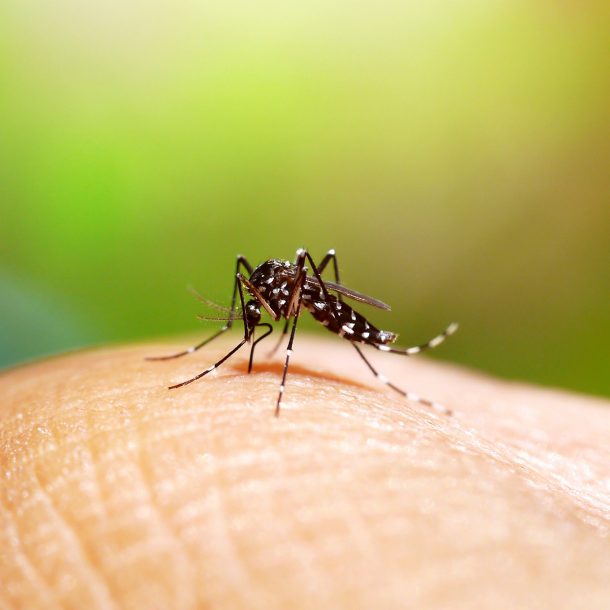
The spread of Aedes albopictus – a mosquito species capable of transmitting both viruses – in parts of southern Europe, North America, and other temperate regions has created the ecological conditions for autochthonous transmission, i.e., infections acquired locally rather than while traveling.1,2 The European Centre for Disease Prevention and Control (ECDC) has documented locally acquired cases in several EU/EEA countries during recent transmission seasons, including 2023 and 2024.3 Surveillance data for 2025 continue to show sporadic local transmission, albeit in comparatively low absolute numbers.3
The viruses are therefore not endemic to temperate regions – they do not circulate continuously year-round in the local population. However, the presence of mosquito species capable of transmission (vectors) means that seasonal transmission is now possible under favorable climatic conditions.
Importantly, vector ecology limits the extent of transmission. While A. albopictus can transmit both viruses, Aedes aegypti remains the most important dengue vector worldwide and is less prevalent in most temperate regions.1 This distinction contributes to the current pattern of limited, seasonal transmission rather than sustained endemic circulation outside the tropics.
For insurers, this represents an evolving background condition rather than an acute structural risk.
Dengue – High Global Incidence, Limited Chronic Disability Impact
Dengue fever remains the most widespread mosquito-borne viral disease worldwide. The World Health Organization (WHO) estimates that there are approximately 390 million infections annually, of which about 96 million are clinically manifest cases.4,5 In recent years, the WHO has reported record numbers worldwide, with more than five million cases reported in individual years.4
Clinically, dengue fever usually manifests after an incubation period of four to 10 days with sudden high fever, severe headache, retroorbital pain, pronounced muscle and joint pain – often referred to as “breakbone fever” – and skin rash.4 Most infections are self-limiting, although a minority of patients may develop severe dengue fever with plasma leakage, bleeding complications, or shock.4
Persistent post-acute symptoms have been described. A prospective cohort study documented post-infectious fatigue following dengue infection,6 and additional observational data suggest that some patients report persistent symptoms over several months.7 However, the available studies suggest that symptom prevalence decreases over time and that persistent functional impairment beyond one year is rare.7
Neurological complications have been reported, including encephalitis, transient encephalopathy, Guillain-Barré syndrome, and, in rare cases, seizures.8 However, such complications remain rare relative to the total number of infections.
From a Disability insurance standpoint, current clinical evidence does not suggest a substantial long-term occupational impairment signal in otherwise healthy adults. Temporary work incapacity may occur, but sustained disability appears rare.
Overall, dengue is a globally prevalent infection with comparatively limited implications for chronic occupational disability in temperate markets.
Chikungunya – The Clinically Relevant Difference
Chikungunya has a distinct clinical and portfolio-relevant profile. After an incubation period of two to seven days, patients usually develop a sudden high fever accompanied by severe, often symmetrical polyarthralgia – pain affecting multiple joints – which particularly affects small peripheral joints.9 Joint pain can significantly restrict mobility during the acute phase.9
The virus reemerged worldwide in 2004/2005, causing large epidemic waves in previously unexposed populations. On the island of La Réunion, about one-third of the population became infected during a single outbreak.9,10 After its introduction to the Americas in 2013, millions of cases were reported throughout the region.11
In temperate regions, including parts of Europe and North America, there were local outbreaks, but their extent remained limited.3,12,13 These events confirm that transmission can also occur outside traditional tropical zones under favorable ecological conditions.
The key underwriting distinction between dengue and chikungunya lies in chronicity.
A systematic review and meta-analysis found that approximately 13% to 15% of patients develop chronic inflammatory arthritis after a chikungunya infection.14 Longitudinal cohort studies show that approximately 30% to 40% of patients experience persistent arthralgia over a period of three months, and a significant proportion still have symptoms after 12 months.15,16
Studies consistently show that being female and increasing age – especially after middle age – are associated with a higher probability of persistent rheumatic symptoms.15,16 These symptoms can include persistent joint pain, morning stiffness, joint swelling, and limited mobility, with small peripheral joints being particularly affected. Severe initial joint involvement and pre-existing rheumatological diseases further increase the likelihood of chronicity.15,16
Current evidence suggests that chronic manifestations are driven by a prolonged immune response – meaning the body’s own inflammatory reaction continues even after the virus itself is no longer actively replicating – rather than by ongoing viral infection.14
Functional and Portfolio-Relevant Considerations
Persistent joint pain does not automatically equate to occupational disability. However, cohort studies have documented measurable effects on health status and quality of life after chikungunya infection.17 In a retrospective cohort analysis, chikungunya infection was associated with persistent impairment of physical health compared to the control group.17
Formal data on specific disabilities following autochthonous outbreaks in highly insured temperate populations remain limited. This represents a relevant evidence gap. To date, these regions have not experienced major epidemic waves comparable to those in tropical regions.
From a reinsurance perspective, the current relevance lies primarily in monitoring rather than pricing. The most plausible impact would be regional aggregation during outbreak years rather than systemic effects across broad Disability portfolios. Based on currently available data, an adjustment of standard Disability insurance in temperate markets does not appear warranted. The relevance is more limited to travel, stays abroad, and geographically concentrated risks.
Vaccination and Risk-Based Prevention
Prevention options have expanded in recent years.
For dengue fever, the tetravalent vaccine Qdenga® (TAK‑003) received marketing authorization in the EU in 2022.18 Clinical trial data demonstrated overall efficacy of approximately 60% to 80%, depending on which of the four biologically distinct dengue virus types is circulating and whether the individual has been previously exposed.4,18 National vaccination authorities recommend vaccination based on individual risk assessment, particularly for travelers to endemic regions.19
For chikungunya, Ixchiq® received regulatory approval in 2024, followed by Vimkunya® in 2025 in certain countries.20,21 Current recommendations emphasize vaccination of individuals at significant risk of exposure rather than routine vaccination of the population.22
From a medical perspective, preventing infection prevents possible chronic sequelae. From an insurance perspective, comprehensive reimbursement strategies require careful evaluation, as data on cost-effectiveness in non-endemic areas remain limited. A targeted approach focusing on defined exposure groups appears medically justifiable.19,22 Vector avoidance measures continue to be generally recommended regardless of vaccination status and are effective.4
Climate as a Structural Driver
The survival of vectors and virus replication are temperature-dependent. Climate modeling studies suggest that environmental conditions for A. albopictus will increasingly improve in parts of Europe, North America, and other temperate regions under moderate warming scenarios.23 While this does not mean that endemic transmission on a tropical scale is imminent, it does increase the likelihood of local seasonal outbreaks.
Conclusion
Dengue and chikungunya are no longer exclusively tropical diseases in epidemiological terms. Autochthonous transmission has been documented in temperate regions, albeit at low absolute numbers.3
Dengue remains predominantly an acute illness with limited evidence of long-term disability.7 Chikungunya, by contrast, has a documented chronic inflammatory phenotype in a minority of patients.14,15,16
For insurers, this is unlikely to materially affect standard Disability underwriting or pricing in the near term. However, the broader ecological trend warrants monitoring. Climate change, vector expansion and shifting seasonal suitability may gradually blur the historical distinction between tropical and non-tropical mosquito-borne viral risk.23
Geographic classifications that historically served as stable underwriting proxies may become less static over time. Early and structured monitoring of autochthonous transmission in temperate regions will help ensure that meaningful epidemiological shifts are identified before they translate into measurable portfolio effects.
At present, there is no cause for alarm. There is, however, reason for disciplined monitoring. This is not yet an underwriting issue. It is, increasingly, a monitoring issue.